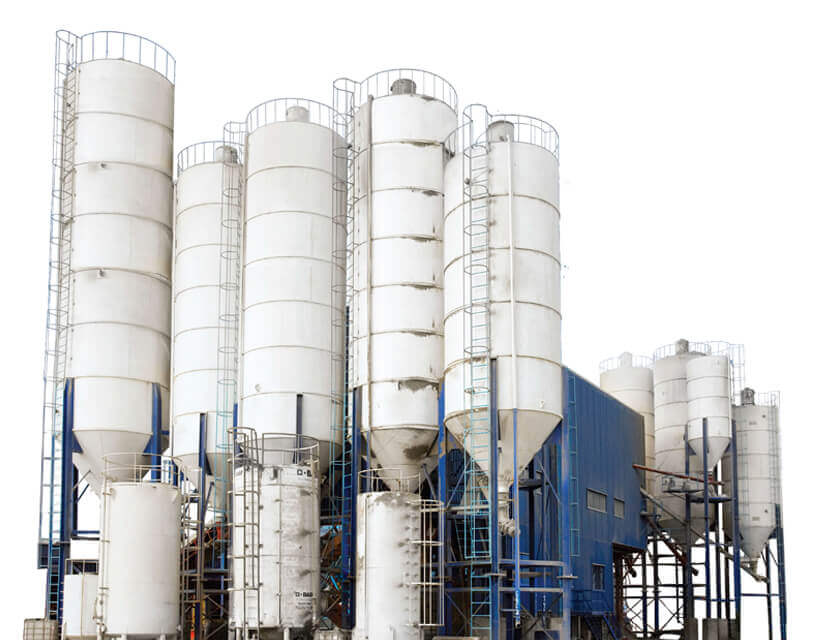
Horizontal cement terminal manufacturer supplying bulk storage systems

Horizontal Cement Terminals

Low-Height Flat Cement Terminals for Space and Height Restricted Sites

German Plant Experience (GPE) designs and supplies low-height horizontal cement terminals and flat rectangular cement storage systems for projects where conventional tall cylindrical silos are unsuitable because of height restrictions, foundation limitations or existing underground infrastructure.

These terminals provide a practical alternative for cement storage at ports, industrial facilities, infrastructure projects and other sites where the construction of tall vertical silos may be restricted or impractical.

The horizontal, low-profile configuration allows substantial cement storage capacity while keeping the overall installation height significantly lower than a conventional vertical silo.

When Is a Horizontal Cement Terminal Required?

A horizontal cement terminal can be particularly useful where the site presents one or more of the following constraints.

1. Height Restrictions Near Airports

Sites located close to airports may be subject to restrictions on the maximum height of structures because of airspace and aviation requirements.

A conventional tall cement silo can therefore present a significant planning and approval challenge.

A low-height horizontal cement terminal provides an alternative configuration that can keep the overall structure within the permitted height envelope, subject to approval by the relevant authorities.

2. Locations Where Visual Impact Is a Consideration

Some projects are located close to historic buildings, scenic areas, city landmarks, waterfronts or other visually sensitive locations.

In these environments, a group of tall cylindrical silos may have a significant visual impact. A low-profile cement terminal can reduce the apparent height of the storage installation while still providing substantial cement storage capacity.

The final design can be developed around the site’s planning, architectural and operational requirements.

3. Sites with High Water Tables or Foundation Constraints

Conventional tall cement silos can impose substantial loads on their foundations and may require significant foundation depth depending on the silo height, diameter, stored material and ground conditions.

Some sites have high groundwater levels, poor ground conditions or restrictions on deep excavation, making conventional deep foundations more difficult or costly.

A horizontal cement terminal distributes the stored material over a larger footprint and can therefore provide an alternative where deep foundation construction is undesirable. The actual foundation and ground-support requirements must, of course, be determined through project-specific structural and geotechnical engineering.

4. Port and Waterfront Cement Terminals

Ports and waterfront industrial areas can contain extensive existing underground services, pipelines, cables, drainage systems and other infrastructure.

Deep excavation for foundations can be difficult or restricted in such locations.

A low-height horizontal cement terminal can provide a practical option for port-based cement storage and distribution, particularly where the project requires substantial storage capacity but deep excavation needs to be minimised.

This makes the technology suitable for applications such as:

  • Cement import terminals
  • Port-based cement storage
  • Infrastructure supply terminals
  • Cement distribution facilities
  • Construction-material terminals
  • Industrial bulk-material storage

Low-Height Alternative to Conventional Cement Silos

The principal advantage of a horizontal cement terminal is the ability to provide large-volume cement storage without relying on the height of a conventional vertical silo.

GPE can engineer the storage configuration according to the required capacity, site footprint, material characteristics, loading and discharge requirements.

The system can also be integrated with appropriate cement handling equipment, including:

  • Cement conveying systems
  • Pneumatic cement filling systems
  • Cement screw conveyors
  • Discharge systems
  • Level monitoring
  • Filtration systems
  • Weighing and dosing equipment
  • Automated control systems

Project-Specific Cement Terminal Design

Every port, industrial site and infrastructure project presents different constraints. GPE therefore develops horizontal cement terminal solutions according to the specific requirements of the project.

Key design considerations can include:

  • Required cement storage capacity
  • Available site footprint
  • Maximum permissible structure height
  • Ground and foundation conditions
  • Existing underground infrastructure
  • Cement receiving arrangements
  • Cement conveying requirements
  • Discharge and distribution requirements
  • Number and type of stored cementitious materials
  • Local structural and safety regulations

GPE can work with the customer’s engineering team to develop a low-height cement storage solution that addresses the site’s specific technical and logistical constraints.

Horizontal Cement Terminals for Challenging Sites

Where a conventional vertical cement silo is restricted by height, foundations, underground infrastructure or site planning considerations, a horizontal cement terminal can provide an alternative approach to bulk cement storage.

GPE combines modular cement storage technology with project-specific engineering to develop solutions for ports, infrastructure projects, industrial facilities and other demanding locations worldwide.

Operational Features of GPE Horizontal Cement Terminals

GPE horizontal cement terminals are designed as modular, bolted cement storage systems that combine efficient bulk cement handling with simplified transportation and site installation.

The terminal configuration can be adapted to the required storage capacity and material-handling arrangements, making it suitable for port-based cement terminals, cement import facilities, infrastructure projects and industrial cement storage applications.

Modular Construction for Efficient Transportation

The cement terminal is manufactured as modular components and transported to the project site in a disassembled, containerised form.

Because the individual components are designed for efficient packing and transportation, the terminal can be shipped internationally without the excessive transport dimensions associated with fully assembled cement storage structures.

Once delivered to site, the components can be assembled using local labour and lifting resources. GPE can provide factory-trained technical supervisors to guide the customer’s installation team through the assembly and erection process.

This approach can reduce international mobilisation requirements while maintaining specialist technical support during installation.

Cement Receiving from Ships or Cement Trucks

GPE horizontal cement terminals can be configured to receive bulk cement through different material-handling arrangements.

Depending on the terminal design and site infrastructure, cement can be transferred:

  • Mechanically from ships
  • Pneumatically from ships
  • Pneumatically from bulk cement trucks
  • Through other project-specific cement conveying systems

This flexibility allows the cement terminal to be integrated with the available port unloading and cement distribution infrastructure.

Direct Cement Loading to Bulk Trucks

Stored cement can be transferred from the terminal directly into bulk cement delivery trucks using an appropriate pneumatic conveying and loading system.

This provides an efficient route from:

Ship → Cement Storage Terminal → Bulk Cement Truck → Customer / Construction Site

The cement terminal can therefore function as a central storage and distribution facility without requiring intermediate handling of the material.

Fully Bolted and Demountable Construction

The major structural components of the GPE cement terminal are bolted rather than permanently welded together at site.

This modular bolted construction provides several practical advantages:

  • Efficient containerised transportation
  • Simplified site assembly
  • Reduced site welding requirements
  • Easier maintenance and component replacement
  • Ability to dismantle the terminal
  • Potential for relocation to another site
  • Greater flexibility when project requirements change

Unlike a permanently constructed welded storage terminal, a bolted modular terminal can be disassembled and relocated, subject to the specific project design and site requirements.

This makes GPE’s horizontal cement terminals particularly attractive for temporary, relocatable or phased cement storage projects.

Modular Storage Capacity

The terminal can be configured with one or multiple storage compartments/modules, allowing the overall cement storage capacity to be matched to the customer’s requirements.

Multiple storage modules can also provide operational flexibility where different cementitious materials need to be stored separately.

The final configuration can be determined according to:

  • Required total storage capacity
  • Cement consumption rate
  • Ship unloading capacity
  • Truck loading requirements
  • Number of cement types
  • Available site footprint
  • Site height restrictions
  • Material-handling system requirements

Optional Cement Weighing System

Where required, GPE can incorporate a load-cell weighing system into the cement terminal.

This enables the quantity of cement being discharged to be measured and monitored, providing useful information for:

  • Cement inventory management
  • Accurate cement loading
  • Stock control
  • Material accounting
  • Integration with downstream batching or process systems

The weighing system can be integrated into the terminal’s control and material-handling arrangement according to the requirements of the project.

Engineered for Port and Industrial Applications

GPE horizontal cement terminals are designed to provide a practical solution where large-volume cement storage is required but conventional tall silos are constrained by site conditions.

Their combination of low-height construction, modular bolted assembly, containerised transportation and flexible cement receiving and discharge arrangements makes them suitable for demanding port, infrastructure and industrial applications worldwide.

By customizing our Concrete Plants to our clients’ specific requirements, we can offer Wet Concrete Batching Plants or Dry Concrete Batching Plants.With our associated offices in Germany, Italy and Middle East, we are able to strike the perfect balance between a Competitive Price and Continuous Upgrades in the Technology for the benefit of our worldwide clients.

By customizing our Concrete Plants to our clients’ specific requirements, we can offer Wet Concrete Batching Plants or Dry Concrete Batching Plants.

Phone
+61390787766
Email Us:
demomail@dummy.com
Suite 311, 227 Collins Street
Melbourne VIC 3000
Australia