 Main Number
 Find us on
 Reach us @
The mixer that looks most capable on a specification sheet may not be the right choice for your project. A concrete batching plant is a coordinated production system, so mixer selection needs to fit batching accuracy, material flow, controls, site layout and required output. Looking at the mixer alone can miss the operating factors that shape the performance of the complete plant.
To compare twin-shaft, planetary and pan mixers, start with the concrete you need to produce, your production rhythm, the range of recipes and the way the plant must integrate with the rest of the operation. Each mixer type works differently, and the right choice depends on how its mixing action and operating characteristics suit those requirements.
This guide explains how a concrete batching plant works, compares the main features of these mixer types and sets out practical questions to include in your project brief. GPE Group designs and manufactures German-engineered plants, with hundreds of installations worldwide. Its plants have been used to manufacture concrete for landmarks including Burj Khalifa. Use the comparison below to define your requirements before settling on a plant configuration.
Key Takeaways
- Assess the complete production sequence, including storage, conveying, weighing, controls and mixing.
- Compare twin-shaft, planetary and pan mixers by considering mixing action, concrete types, production rhythm and plant integration.
- Choose between stationary and mobile plant configurations, and wet or dry production, based on how the operation will run.
- Build a project brief covering output needs, recipes, site constraints, operating patterns and integration requirements.
- GPE Group designs concrete batching plants with custom production capacities from 30 m³/h to 400 m³/h.
What Is a Concrete Batching Plant, and What Role Does It Serve?
A concrete batching plant is a production system that measures and combines cement, aggregates, water and admixtures in specified proportions to prepare concrete batches.
The plant turns a project’s concrete specification into a repeatable production process. It brings together storage, material handling, proportioning and mixing so each batch can be prepared to the required recipe. The mixer is one part of the system. The plant also controls how materials are moved and measured before they reach the mixer.
This distinction helps clarify the difference between manufacturing a plant and supplying concrete. A plant manufacturer designs and builds production equipment, whereas commercial suppliers such as OnTime Readymix Concrete use these systems to deliver concrete directly to construction sites. The equipment itself is not the concrete or a concrete delivery service.
The Plant’s Role in Concrete Production
A concrete recipe specifies the materials and proportions for an application. Cement, aggregates and water are common inputs, and the recipe may also call for admixtures. The batching plant measures and combines these materials according to the specified mix. It does not determine the project’s concrete requirements.
That distinction matters when planning equipment: the plant supports production to a project specification, but it is not the concrete itself. For a general description of plant types and operation, see this concrete batching plant overview.
Where Batching Plants Fit into an Operation
A batching plant may serve a readymix operation, a precast facility or a construction project producing concrete for its own work. The operating context affects how materials reach the plant and where prepared batches go next. In every case, storage and handling need to connect with the production process.
For example, aggregates and cement need to be stored and transferred into the batching sequence. Water and any specified admixtures must also enter in the required proportions. The arrangement depends on production needs and site conditions. Because the mixer performs only one stage of the process, compare mixer types in the context of the full plant layout.
The next section traces how material storage, conveying, weighing and mixing work together. Understanding that sequence makes it easier to separate the project’s concrete specification from the equipment requirements, and to identify where each mixer type fits in the operation.
How a Concrete Batching Plant Coordinates Materials and Production
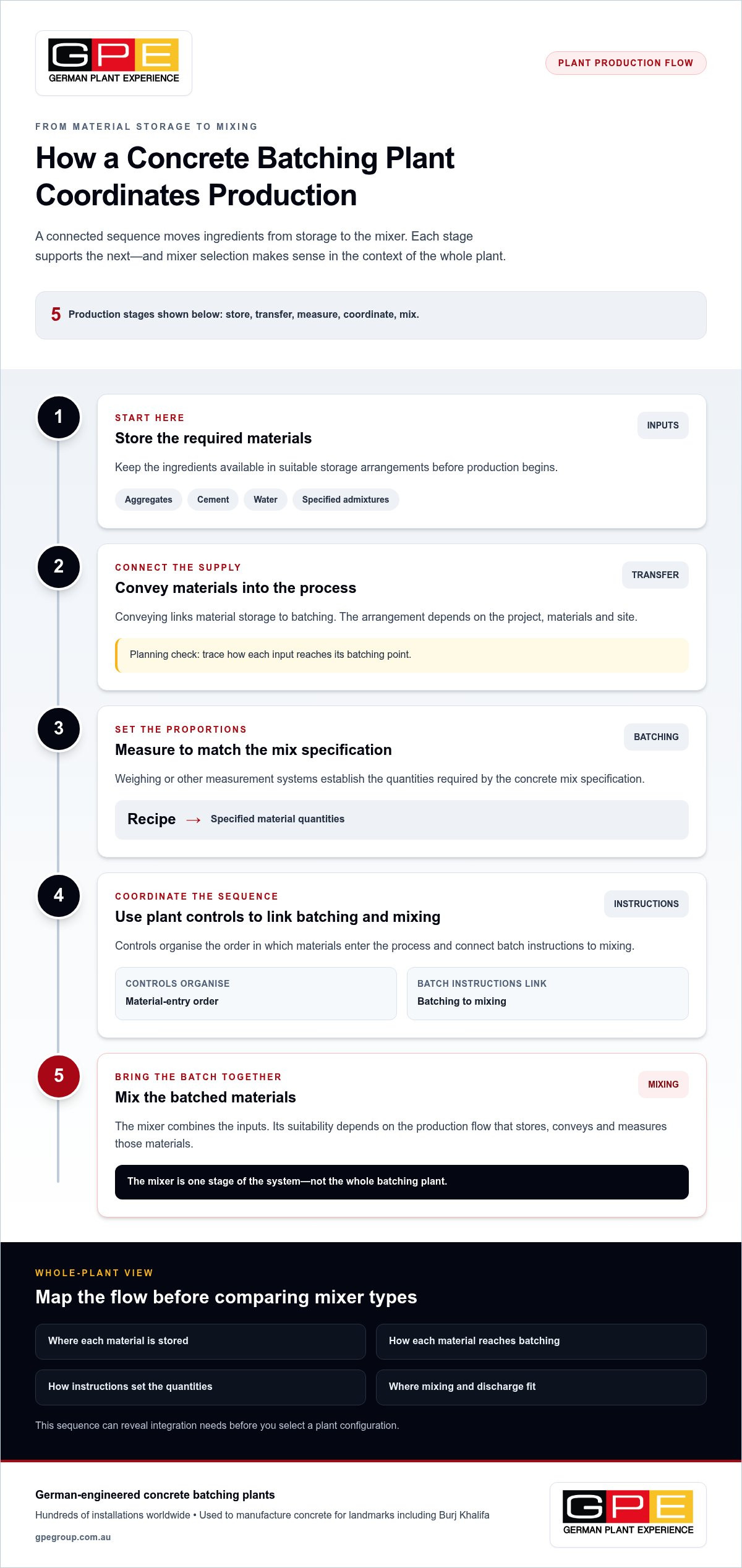
A concrete batching plant works as a connected sequence, not a collection of independent machines. Materials are stored, moved into the batching process, measured to match the mix specification and then directed to the mixer. Each stage relies on the one before it: materials must be available and reach the correct production point for the batch to be prepared as intended.
This system-level view is useful when comparing mixers. The mixer combines the batched materials, but its place in the production flow depends on how the plant stores, conveys and measures them, and how the equipment is arranged for the project.
From Material Storage to Batch Preparation
Production begins with materials held in suitable storage arrangements. Aggregates and cement, along with water and any specified admixtures, are transferred into the process. Conveying links storage to batching, while weighing or other measurement systems establish the quantities required by the concrete mix specification.
Once measured, the materials are brought together for mixing. The sequence and layout depend on the project, the materials being used and the site. For example, the material-handling design needs to account for how each input reaches its batching point. Mixer selection alone does not determine that arrangement. Research into concrete properties and performance, including NIST concrete research, is one reason to consider production in relation to the material being made.
Controls, Mixing and Production Flow
Plant controls coordinate operating steps with batch instructions. They organise the order in which materials enter the process and link batching to mixing. Operators use those instructions to produce the specified mix, while the plant sequence connects material supply with the work taking place at the mixer.
Mixing follows batching. The selected mixer combines the inputs, but its suitability also depends on whether the plant can deliver them in a sequence that fits the operation. This is why comparing twin-shaft, planetary and pan mixers means looking beyond the mixer itself.
To map the process, identify where each material is stored, trace how it reaches batching, record how instructions set the quantities, and show where mixing and discharge fit into the operation. This exercise can reveal integration needs before you select a configuration. For information about plant engineering and integration, explore GPE Group’s concrete batching plant solutions.
Concrete Batching Plant Configurations and Their Operating Context
Stationary and mobile configurations suit different site and operating conditions; neither is automatically right for every project. Consider how long production will stay at one location, whether relocation is planned, how materials can reach the plant and how it must connect to the wider operation. Mixer selection comes next, within the context of the plant layout and production approach.
| Planning consideration | Stationary configuration | Mobile configuration |
|---|---|---|
| Operating context | May suit an established site where production is planned around a fixed location. | May suit projects where relocation is part of the operating plan. |
| Site planning | Available space and the intended arrangement of storage, material handling and production shape the design. | Deployment still requires planning for the site, material supply and connection to project operations. |
| Integration | Planning can focus on how the plant fits an established production system. | Planning must account for how the plant will operate at each intended project location. |
Wet and dry production are another configuration choice, not a ranking of quality. With wet production, materials are mixed at the plant before the concrete moves to its next stage. With dry production, the plant batches the constituents without completing the mixing there; mixing takes place downstream. The appropriate setup depends on the production process and how the concrete will be handled after batching.
Stationary Concrete Batching Plant Considerations
For an established site, stationary plant planning can centre on the intended production flow and its connections to surrounding facilities. Available space affects the position of storage, conveying and mixing, as well as the movement of materials between stages. Include the plant footprint, access routes and material supply paths in the site plan, along with the plant’s connection to the rest of the operation.
Mobile Concrete Batching Plant Considerations
If work may move between locations, relocation becomes part of configuration planning. A mobile plant still needs an appropriate operating position, a workable material supply arrangement and integration with production at each site. Mobility does not remove the need to assess space, access and operating requirements before deployment.
To compare configurations, document how permanent the operating location is, whether relocation is expected, what space is available and how the plant will connect with material supply and concrete use. Then assess whether wet or dry production fits the process. These decisions establish the context for comparing mixers without assuming that one configuration or mixing approach is right for every project.
How Do Twin-Shaft, Planetary and Pan Mixers Differ?
The main difference is the way each mixer moves material. A twin-shaft mixer uses two horizontal shafts fitted with mixing tools to work the batch. A planetary mixer uses mixing tools that rotate around a central axis while travelling around the mixing pan. A pan mixer has a stationary pan and rotating mixing tools. Design details vary, so compare the actual mixer arrangement rather than relying on the category name alone.
When narrowing the options, consider the planned batch output, the concrete recipes and consistency requirements, how frequently recipes change, and the mixer’s cleaning and maintenance needs. Also ask how the mixer fits the plant’s batching and discharge sequence. Twin-shaft and planetary mixers are part of GPE’s range, with mixer selection considered alongside the wider plant design.
A dedicated mobile-versus-stationary comparison can explore deployment conditions in more depth. This framework helps establish which questions belong in your project brief before you compare specific plant and mixer configurations.
How to Define Concrete Batching Plant Requirements for a Project
A useful project brief connects production objectives with site conditions, concrete requirements and plant integration. Recording these inputs before selecting a mixer or plant configuration gives the engineering process a clear basis and helps surface constraints early.
Establish Production and Site Requirements
Start with the operating context, then record expected demand and the conditions under which production needs to take place. Capacity planning should reflect operating patterns and concrete requirements, not just a headline output figure. Demand may vary between shifts, project stages or locations, so describe the production profile the plant needs to support.
- Define production objectives. Record required output, the anticipated operating schedule and whether production will serve a fixed facility or changing project locations. Note expected demand changes over the project lifecycle.
- Describe the concrete requirements. Identify project specifications, mix types and recipes, including known variations between applications. This information helps define the batching and mixing arrangement.
- Assess the site. Document access for equipment and material deliveries, available footprint, relevant layout constraints and any site conditions that could affect planning. Include whether relocation is part of the project plan.
These inputs help you evaluate output needs against actual operating conditions. A separate guide to choosing batching plant capacity can help frame that decision; the essential first step is to describe the demand profile the plant must serve.
Set Integration and Project Requirements
With production and site conditions recorded, describe how the plant must connect with material storage, handling and the operation that receives the prepared concrete. Consider how materials will be supplied and stored, where the plant can be positioned and how its production flow fits downstream requirements. Poorly defined interfaces can affect the whole layout, even when the mixer itself is suitable.
- Map the system interfaces. Note the intended connections between storage, material supply, batching, mixing and downstream processes. Identify any existing equipment or facilities the plant must integrate with.
- Record project obligations. List applicable Australian Standards, approvals and project-specific requirements for the plant and its operation. GPE Group designs its batching plants in line with Australian Standards. Include the requirements that apply to your project in the brief.
- Capture lifecycle considerations. Include expected operating duration, maintenance planning and support needs so the brief covers ongoing operation as well as installation.
Bring these details together in a concise project brief before comparing plant configurations or mixer types. For a project-specific discussion of requirements and plant design, discuss your batching plant project with GPE Group.
GPE Group Concrete Batching Plants: German Engineering and Project Delivery
GPE Group is a concrete batching plant manufacturer and supplier in Australia. It designs stationary and mobile plants around project-specific production and site requirements. Rather than treating the mixer as a standalone purchase, GPE considers how plant configuration, material handling and operating needs fit together. This gives project teams a practical basis for defining the equipment and integration requirements.
A Tailored Plant Range for Project Requirements
Stationary and mobile configurations suit different operating contexts. The right arrangement depends on production objectives, available site space, material supply and whether the plant will stay in one location or move with project demands. GPE’s turnkey solutions bring design and project delivery together, with these factors informing plant configuration and integration.
For project teams, the value is in connecting the brief to engineering decisions. Defining the expected operating pattern and site interfaces helps shape the plant arrangement, rather than relying on a mixer choice alone. GPE’s custom production capacities range from 30 m³/h to 400 m³/h.
Engineering Experience and Ongoing Support
GPE’s concrete batching plants are engineered in Germany. The company has installed hundreds of plants worldwide, and its equipment has been used to manufacture concrete for landmarks including Burj Khalifa. GPE operates in Germany, Italy, Dubai and Australia, and installs all over the world. Its after-sales service and spare parts are provided around the world, supporting lifecycle planning alongside the initial plant solution.
As you prepare your brief, bring together production objectives, site conditions, material supply and integration requirements. These details provide a clear starting point for assessing a plant arrangement suited to the operation, including whether a stationary or mobile configuration is appropriate.
Turn Your Mixer Comparison into a Project Brief
The most useful outcome of comparing mixers is a clearer basis for engineering decisions. Before selecting a configuration, bring production objectives, concrete requirements, operating patterns and site constraints into one project brief. This shifts the discussion from choosing a mixer in isolation to defining how the complete concrete batching plant needs to support the operation.
With those requirements set out, assess how they can be translated into a plant design suited to the project. A considered brief gives the engineering discussion a practical starting point and keeps configuration decisions connected to real operating needs.
Discuss your concrete batching plant requirements with GPE Group and take the next step towards a project-specific solution.
Frequently Asked Questions
What does a concrete batching plant do?
A concrete batching plant prepares batches by measuring and combining specified materials in controlled proportions. It can support readymix supply, precast manufacturing or construction work, with each batch prepared for its intended application. The plant does not set the project’s concrete specification or supply concrete on its own. The operator’s mix instructions and production requirements guide its use.
How do I choose concrete batching plant capacity?
Start with the volume your operation expects to produce and when demand is likely to peak. Then consider operating hours, required mix types and whether demand will change between project stages. Distinguish average demand from peak requirements and describe the expected operating pattern. This gives the manufacturer a practical basis for matching plant capacity to the project.
What hourly capacity corresponds to a 3 m³ twin-shaft mixer?
GPE’s GPE 120-6-3-1 configuration has a twin-shaft mixer with 3 cbm output and a production capacity of 120 cbm/hr. This figure applies to that specific plant configuration, not to every mixer or production system. When comparing options, consider the complete plant specification and how its batching stages support the mixer.
What concrete slump can a batching plant achieve?
There is no single slump value that applies to every plant. Slump is determined by the concrete mix and its specified ingredients and proportions; the plant’s role is to batch those materials for production. Set the target in the project’s concrete specification and recipe. Mixer type alone does not establish a guaranteed slump, so use the requirements for the particular application.
Are GPE concrete batching plants designed in line with Australian Standards?
Yes. GPE designs its concrete batching plants in line with Australian Standards. In your project brief, identify the standards and requirements that apply to the specific plant, site and intended operation. This describes GPE’s design approach; project-specific approvals and requirements still need to be defined for the project.
What does German engineering mean for a concrete batching plant?
GPE’s concrete batching plants are engineered in Germany. For a project team, the practical consideration is how the engineering translates operational needs into a plant configuration, including the relationship between production requirements, site conditions and system integration. The required capacity and arrangement are still determined by the project brief and operating context.
Are batching plant parts available in Australia?
Many batching plant parts are from internationally known brands and are easily available in Australia. This can inform maintenance planning, since component brands and parts access may affect how an operation plans servicing and replacement. Record the equipment installed in each system so maintenance plans identify the relevant components and parts.