 Main Number
 Find us on
 Reach us @
A well-managed automated asphalt plant can help Australian contractors reduce material waste by around 10% to 15%. The practical route to reducing operational costs with an automated asphalt plant is tighter control of material dosing, production temperatures, energy use and maintenance, with results shaped by operating conditions and discipline.
Material and energy use are major operating costs, so even modest process inefficiencies can affect production economics over time. Automated controls help operators track inputs and maintain consistent production, while planned maintenance can limit avoidable disruption.
This article explains how mix control, energy-efficient equipment, material management, maintenance planning and automation can help reduce costs. It also shows how to compare waste with a production baseline, so you can assess potential savings against your plant’s actual operations.
Key Takeaways
- Automated dosing and temperature controls can improve mix consistency while helping limit overuse of materials and energy.
- Burner calibration, moisture management and waste-heat recovery are key areas to examine when assessing fuel consumption.
- Automated asphalt plants can help reduce material waste by around 10% to 15% in well-managed projects, with outcomes shaped by operating conditions and discipline.
- Planned inspections and calibration support reliable production, while predictive maintenance can help identify potential equipment issues earlier.
- Match automation and smart monitoring to the scale of production, then use operational data to identify where efficiency improvements matter most.
Automated control of mix ratios and production temperatures
Sensors and digital controllers measure aggregate, bitumen and filler inputs, then regulate feed rates and mixing conditions. For Australian operators, this provides a consistent basis for managing material use, temperature and production quality across different recipes.
Resource Management and Mix Quality
Automated resource management uses measured inputs and process data to keep asphalt production aligned with the selected mix recipe. Sensors track aggregate, bitumen and filler quantities, while controllers regulate feed rates and mixing conditions. Inaccurate proportions can waste material or produce a mix with the wrong composition. Some automated cold-feed systems can store an unlimited number of recipes, supporting controlled changes to material proportions, capacity, quantity and speed.
Mixing time is another important control. Monitoring it helps avoid the excess energy use of over-mixing and the quality problems of under-mixing. Real-time monitoring can also track fuel use, emissions and mix composition. Operators can use these readings to spot deviations from required settings during production, rather than relying only on checks at the end of the process.
Energy Use from Automated Temperature Controls
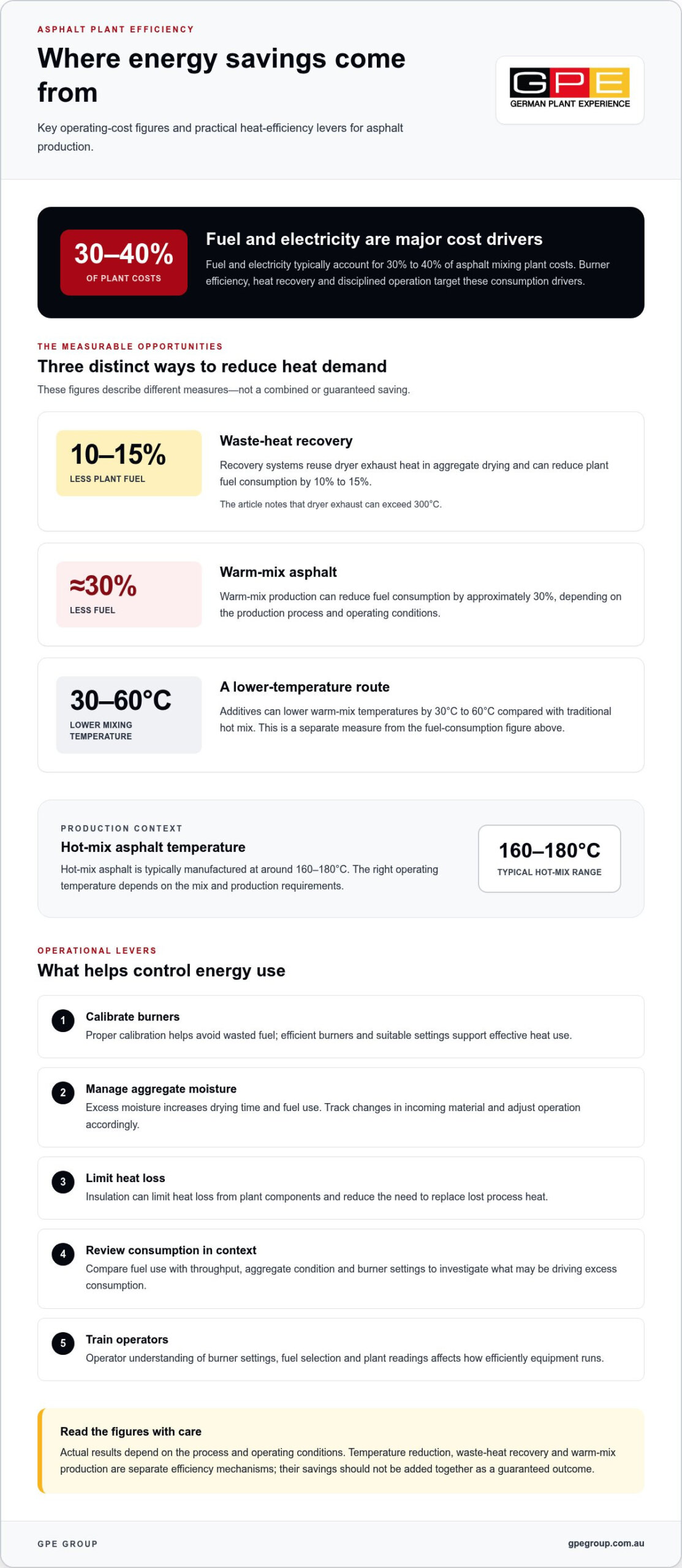
Automated temperature control coordinates burner output with the required production temperature, helping avoid unnecessary heating. Hot-mix asphalt is typically manufactured at around 160-180°C. Lowering production temperatures where the mix and process allow can help reduce energy use and emissions, making temperature control relevant to costs and environmental impact.
That figure describes the potential associated with lowering production temperature, not a guaranteed saving from automation. The right operating temperature depends on the mix and production requirements. Automated monitoring gives operators a clearer view of temperature variation, helping them make controlled adjustments instead of heating beyond what the process requires.
Automated burner controls can support more precise temperature management and may help avoid unnecessary heating. The actual reduction depends on the temperature change achieved and production conditions.
Automation also brings implementation challenges. Operators need training to interpret alerts, dashboards and adjustment functions. Sensors and feed systems require calibration, and process settings must match the intended mix. Without trained staff and reliable measurements, automated adjustments may not deliver accurate proportions or temperatures.
Environmental monitoring adds another layer of operational data. Real-time systems can track emissions, and some modern mobile plants include built-in dust collectors and pollution-control systems. Reviewing these readings alongside fuel use and mix data helps operators understand how production settings affect resource use and environmental performance.
Energy-efficient equipment and waste-heat recovery
Fuel and electricity typically account for 30% to 40% of asphalt mixing plant costs. Efficient burners, heat recovery and disciplined operating practices target these consumption drivers.
Burners, Fuel Options, and Combustion Efficiency
Combustion efficiency measures how effectively a burner converts fuel into usable heat for drying and mixing. Proper calibration helps avoid wasted fuel, while high-efficiency burners can improve energy use. Some modern mobile plants also support multiple fuel options, allowing the equipment configuration to suit operational needs. Insulation can limit heat loss from plant components, reducing the need to replace lost process heat.
Fuel Consumption and Energy Efficiency
Fuel consumption reflects the heat required to dry aggregates and maintain production conditions. Excess moisture increases drying time and fuel use, so controlling moisture in incoming materials can improve efficiency. Waste-heat recovery systems reuse dryer exhaust heat in aggregate drying. Dryer exhaust can exceed 300°C, and recovery systems can reduce plant fuel consumption by 10% to 15%.
Warm-mix asphalt provides another route to lower heat demand. Additives can lower mixing temperatures by 30°C to 60°C compared with traditional hot mix, and warm-mix production can reduce fuel consumption by approximately 30%. These figures describe different energy-saving mechanisms, not a combined saving. The achievable effect depends on the production process and operating conditions.
Employee capability affects how efficiently equipment runs. Operators need to understand burner settings, fuel selection and plant readings, and respond to changes in aggregate moisture or production requirements. Training should cover routine controls and how burner output affects drying performance. Reviewing consumption data can help teams identify avoidable heat loss and inefficient operating patterns.
How much labour can automation save, and which roles remain essential? Mobile asphalt plants may require fewer personnel than traditional plants, but no labour-savings figure is available here. Trained operators, maintenance personnel and staff responsible for production quality remain essential to safe, consistent operation.
Energy performance depends on coordinated equipment operation. A calibrated burner cannot compensate for wet aggregate, heat escaping through poorly insulated surfaces or unnecessary production interruptions. Operators can compare fuel use with throughput, aggregate condition and burner settings to identify what is driving excess consumption. This makes an efficiency review more useful than treating fuel use as an isolated figure.
Waste-heat recovery is most relevant when dryer exhaust contains recoverable heat and the plant can reuse it effectively. Assessing the recovery arrangement alongside burner performance, insulation and material moisture gives a fuller picture of energy demand. Together, these measures link equipment choices and day-to-day operating practices with lower fuel requirements.
Can Automated Asphalt Plants Reduce Material Waste by 15% in Australia?
Automated asphalt plants can help Australian contractors reduce material waste by around 10% to 15% in well-managed projects. The result depends on project conditions and operational discipline, while accurate batching and reclaimed asphalt pavement (RAP) use offer practical ways to reduce waste and virgin-material demand.
Automated batching improves control over the proportions of aggregate, bitumen and filler. Better accuracy can reduce material overuse by 5% to 8%, limiting excess input while supporting consistent mix composition. This matters because asphalt, sand and stone aggregates, and fillers account for over 50% of asphalt mixing plant costs. Reducing avoidable overuse therefore targets a substantial part of production expenditure.
RAP integration allows reclaimed material to replace part of the virgin aggregate and bitumen in a new mix. Optimised RAP use can reduce demand for virgin materials by 3% to 6%. Some advanced asphalt plant solutions can support reclaimed asphalt content of up to 90% while maintaining high quality standards. The appropriate proportion depends on plant design, storage capacity, mix requirements and controlled dosing.
Effective RAP recycling requires suitable material handling and accurate feed control. Increasing RAP use may require changes to plant design and storage capacity. Precision dosing helps maintain the selected recycled-material ratio during production, while consistent storage and handling support reliable feeding. RAP can also reduce heating requirements, alongside lowering demand for virgin materials.
Measure waste before assessing the effect of automation. Establish a baseline covering batching waste, rejected loads and transport losses. For example, compare these measures across production periods after improving feed accuracy or changing RAP proportions. Tracking each source separately helps show whether waste reduction comes from more precise batching, fewer rejected loads or improved logistics.
Producing asphalt near a project can reduce transport needs, while project-specific batch production can limit unused mix. Mobile asphalt plants can produce batches tailored to project requirements, and on-site production can reduce the risk of excess material. These choices complement RAP use but address different sources of waste: material composition, batch quantity and transport.
Australian asphalt plants must meet applicable environmental and workplace safety requirements, including controls for emissions, dust, noise and worker risks. Obligations vary by state or territory and site approval, so plant operation must comply with the requirements that apply to the location.
Emissions performance depends on material choices and production control. RAP recycling can reduce demand for virgin materials, while accurate batching limits excess inputs that would otherwise need processing. Tracking batching waste, rejected loads and transport losses gives Australian operators a practical way to assess whether process changes are reducing total material waste.
Routine maintenance and spare-parts budgeting
Planned maintenance protects asphalt plant availability by addressing wear before it interrupts production. Budgeting 5% to 10% of total equipment cost annually for maintenance provides a planning reference, not a guaranteed spend. The allocation should account for plant condition, operating demands, component wear and the maintenance practices needed to preserve production capacity.
Preventive inspections should focus on components that affect material flow and processing. Regularly inspect and calibrate feeders to maintain accurate material proportions. Keeping the dryer drum clean and free of buildup supports efficiency, while inspecting mixer paddles and cleaning the drum helps maintain mixing performance. Recording inspections makes recurring wear patterns easier to spot.
Downtime can affect more than the component that fails. A feeder fault, for example, can interrupt aggregate delivery and halt production until it is resolved. Maintenance planning helps teams schedule inspections and parts replacement around operating needs instead of waiting for an unexpected stoppage. Priorities depend on plant workload, component condition and the consequences of a fault.
Predictive maintenance software adds equipment-condition information to the planning process. By identifying potential breakdowns early, it can help maintenance teams prioritise inspections and repairs. Control systems and monitoring data can also help distinguish a developing fault from a process change, such as altered feed behaviour. Staff who understand the plant and its operating patterns are best placed to interpret these signals.
A practical maintenance plan should link the annual budget to the plant’s component needs. For example, teams can group work into:
- Inspection: Check feeders, dryer drum condition and mixer paddles during scheduled reviews.
- Calibration: Verify feeder accuracy when material proportions appear inconsistent.
- Cleaning: Remove buildup from the dryer drum and mixer to support efficient operation.
- Parts planning: Track wear and replacement history to inform spare-parts budgeting.
These practices help managers allocate maintenance resources across the year. A plant operating at sustained capacity may need more frequent inspections and parts readiness than one with intermittent production. Records connecting operating hours, recurring defects, repairs and interruptions can reveal which components need closer attention.
Budget control also means separating planned work from breakdown response. Comparing the two over time shows whether preventive inspections are addressing recurring faults or maintenance priorities need adjustment. Combined with predictive alerts and accurate equipment records, this supports decisions about repairs, parts and production scheduling without treating every component as equally urgent.
Automation and smart-technology cost reductions
Digital controls connect production data with plant components, helping teams respond to faults and process variation. Their value depends on how well the technology fits production scale and operational requirements.
Upgrading an existing plant can preserve serviceable equipment, while a new plant can integrate controls throughout its design. The right approach depends on component condition, compatibility, production needs and the downtime each option involves.
Total Cost of Ownership
Total cost of ownership covers the cost of operating a plant over its working life, not just its purchase price. It includes energy, labour, maintenance, spare parts, transport, installation and downtime. Comparing these factors helps Australian operators decide whether an upgrade or new equipment better fits their production profile, site requirements and expected operating demands.
Automation, Waste, Rejected Batches, and Maintenance
Automation can reduce waste and rejected batches by controlling feed rates, production settings and loadout data more consistently. Monitoring process data can reveal deviations sooner, allowing adjustments before they affect more production. Predictive maintenance software can also flag potential equipment problems, helping teams schedule work before a fault causes extended downtime.
Reported SCADA implementations have reduced equipment fault response time by 40% and increased production efficiency by 12%. These outcomes illustrate how faster fault visibility and coordinated control can support operational performance. Advanced intelligent systems have also been reported to increase asphalt production efficiency by 28%, although results depend on system design and plant operations.
Remote monitoring can help teams identify operating issues without relying solely on an onsite inspection. One reported case reduced downtime from 24 hours to 2 hours. Automated conveyor controls can streamline aggregate movement, while automated loadout systems can speed truck filling. Digital transfer of delivery-note data into invoicing systems can also reduce administrative work.
Which automation technologies and suppliers serve asphalt plants in Australia? Common technologies include sensors, programmable controls, SCADA monitoring, automated conveyors and loadout systems. Plant manufacturers, automation integrators and component suppliers provide different parts of these systems, from equipment integration to controls and monitoring.
Transport also affects ownership costs. Mobile asphalt plants can move closer to construction sites, reducing material transport and related fuel, labour and equipment maintenance. Producing project-specific batches near the work can limit unused mix, while helping maintain supply when distant deliveries are delayed.
To compare an upgrade with a new automated plant, map the existing equipment’s condition against the required production and control functions. Then weigh integration requirements, operating efficiency, maintenance needs, transport and downtime together, rather than assessing purchase price alone. Review asphalt plant options against your project’s operational requirements.
GPE Group: Concrete Batching Plants
GPE Group is a German-engineered Concrete Batching Plant Manufacturer and Concrete Batching Plant Supplier serving projects across Australia. Its stationary and mobile plants are tailored to production requirements, with custom capacities ranging from 30 m³/h to 400 m³/h. Cement silos support bulk storage requirements as part of concrete production infrastructure.
GPE Group designs and supplies asphalt plants, including stationary and mobile solutions, with systems for aggregate feeding, drying, screening, bitumen dosing and mixing. Optional RAP and recycled-asphalt capability can support projects that require recycled materials. For operations that also need concrete production, GPE Group offers concrete batching plants and cement silos, with plant design, engineering and turnkey project delivery.
Discuss an asphalt plant, concrete batching plant or silo solution for your project with GPE Group. Visit gpegroup.com.au to get started.
Plan the Next Investment Decision
Reducing operational costs with an automated asphalt plant is an ongoing investment decision shaped by production demands and the project pipeline. Before making a change, define the operating outcomes that matter, then assess how equipment, controls and support fit those requirements.
For businesses planning related concrete production infrastructure, GPE Group offers concrete batching plants, mobile concrete batching plants and cement silos. These solutions serve a separate but related part of construction-material production and can be considered as part of broader project planning.
Bring your operational priorities and project requirements into the next discussion. Contact GPE Group to discuss your plant and consider the equipment configuration that fits your work. A clear, project-led assessment provides a sound basis for moving forward with confidence.
Frequently Asked Questions
How to Reduce the Energy Consumption of Drum Mix Asphalt Plants?
Start by measuring energy use against production output, then investigate where consumption increases. Compare operating periods with different aggregate moisture levels, burner settings, production rates and idle time. This helps separate drying demand from losses caused by inefficient operation. Review the results with operators and maintenance staff, since equipment condition and working practices both affect energy use. Use the findings to prioritise adjustments and track their effect in later production runs.
ROI Considerations: Is Payback in 3-5 Years?
A 3-5-year payback should not be treated as a standard outcome for asphalt plant automation. Calculate the expected payback from the project’s initial investment and its annual net savings, using actual production and operating data. Include energy, labour, maintenance, rejected material and downtime, while accounting for ongoing system costs. Production volume, operating hours and the scope of automation all influence the calculation, so a result from another plant may not apply.
How Can Automation Reduce Operating Costs at an Asphalt Plant?
Automation can lower operating costs by coordinating material movement, production controls and loadout data. For example, conveyor controls can manage aggregate transfer, while digital delivery-note data can reduce manual invoicing work. A sound approach to reducing operational costs with an automated asphalt plant compares these changes with production records, labour needs and avoidable interruptions. Assess each system by the problem it addresses, rather than adding technology without a clear purpose.
What Is the Upfront Cost of Automating an Asphalt Plant in Australia?
The initial investment depends on whether the project involves control upgrades, integrated equipment or a new automated plant. Factors include compatibility with existing components, installation, commissioning, operator training and site requirements. Comparing proposals by scope and included work helps distinguish a targeted upgrade from a wider plant investment without assuming they offer equivalent capabilities.
What Are Typical Energy and Fuel Costs for Australian Asphalt Plants?
Australian operators can establish these costs using plant fuel and electricity records, production tonnage and applicable energy tariffs. Separate fuel used for drying from electricity consumed by plant equipment, then compare each with output across representative operating periods. Include idle periods and changes in production volume. This creates a site-specific cost baseline and helps show whether changes in consumption reflect equipment performance, operating conditions or production schedules.
How Should Australian Operators Calculate Payback and Return on Investment for Plant Automation?
Compare the project’s initial investment with expected net operating savings over the evaluation period. Include measurable changes in energy use, labour, maintenance, material waste, rejected loads and downtime, then account for ongoing automated-system costs. Use the plant’s own production and cost records as the baseline. Test the calculation at different operating volumes, since lower utilisation can extend payback even when the technology performs as intended.