 Main Number
 Find us on
 Reach us @
The decisive difference in cement silo vs cement terminal planning is not simply capacity. It is whether your project needs a storage vessel or an integrated system for receiving, storing and transferring bulk cement. A silo holds material for use at a plant or facility; a terminal coordinates storage with the movement of material through the site.
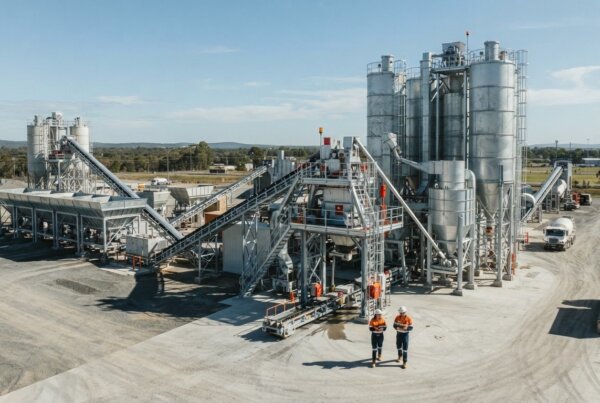
The terms can seem interchangeable because both systems may include silos. To distinguish them, map how cement arrives, where it is stored and where it goes next. GPE Group cement silos have capacities from 50 m³ to 3,000 m³, while a terminal may combine multiple silos to handle up to 20,000 MT of cement.
This guide explains how the systems differ and what to define before selecting a configuration. Use it to assess storage volumes, delivery and unloading arrangements, transfer routes, available space and site access. Those details help establish whether your project needs a standalone silo or a broader terminal installation.
Key Takeaways
- The cement silo vs cement terminal decision depends on material flow and project scope, not capacity alone.
- Map delivery, unloading, storage and onward transfer to define the handling arrangements your operation needs.
- Assess material types, required storage volumes, receiving patterns, site access and available space together.
- Terminal designs can include transfer options such as pneumatic conveying, direct truck loading, telescopic chutes or cement screws.
Cement Silo vs Cement Terminal: What Each System Does
A cement silo is a bulk-storage vessel. A cement terminal is a wider installation that integrates storage with receiving and material-handling operations. Both can include silos, but “terminal” describes the overall system, not simply a larger vessel. Its scope depends on how cement arrives, where it is held and how it is transferred onward.
Project terminology can vary, so define equipment by its function and the limits of the system. A silo may be one part of a terminal, while “terminal” refers to the connected installation around it. This distinction helps teams separate individual silo capacity from facility-wide receiving and transfer requirements.
In practical terms, a silo provides storage; a terminal coordinates the movement of bulk cement through connected equipment. A standalone silo may supply cement to a batching plant or another operation. A terminal adds system-level functions for receiving and transferring material as part of the project scope.
What Is a Cement Silo in Bulk-Material Operations?
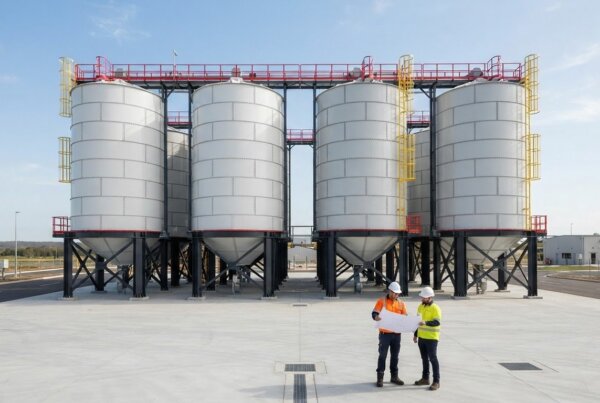
A cement silo holds cement or another specified bulk powder until the operation needs it. Its primary function is storage rather than managing the complete material-handling process. GPE cement silos use bolted steel-panel construction and are supplied with a special waterproof gasket. Their stated capacity range is 50 m³ to 3,000 m³, with diameters from 3,500 mm to 12,500 mm. For a general overview of silo types and uses, see Silo.
What Makes a Cement Terminal More Than a Silo?
A cement terminal coordinates receiving, storage and onward transfer. Multiple silos may provide storage, while the connected equipment and receiving process define the wider installation. An individual terminal silo can hold up to 3,000 m³; a terminal assembled from multiple silos can handle up to 20,000 MT of cement. These figures describe different things: the capacity of one vessel and the handling capacity stated for a multi-silo terminal.
The project’s operating requirements establish the system boundary. If the need is to store cement for use at one facility, the silo is the main unit under consideration. If the project also needs an integrated arrangement to receive bulk deliveries and transfer material through the site, include terminal functions in the assessment. Define this boundary early to avoid treating every large silo as a terminal or assuming that all terminals use the same layout.
How Cement Silos and Cement Terminals Handle Material
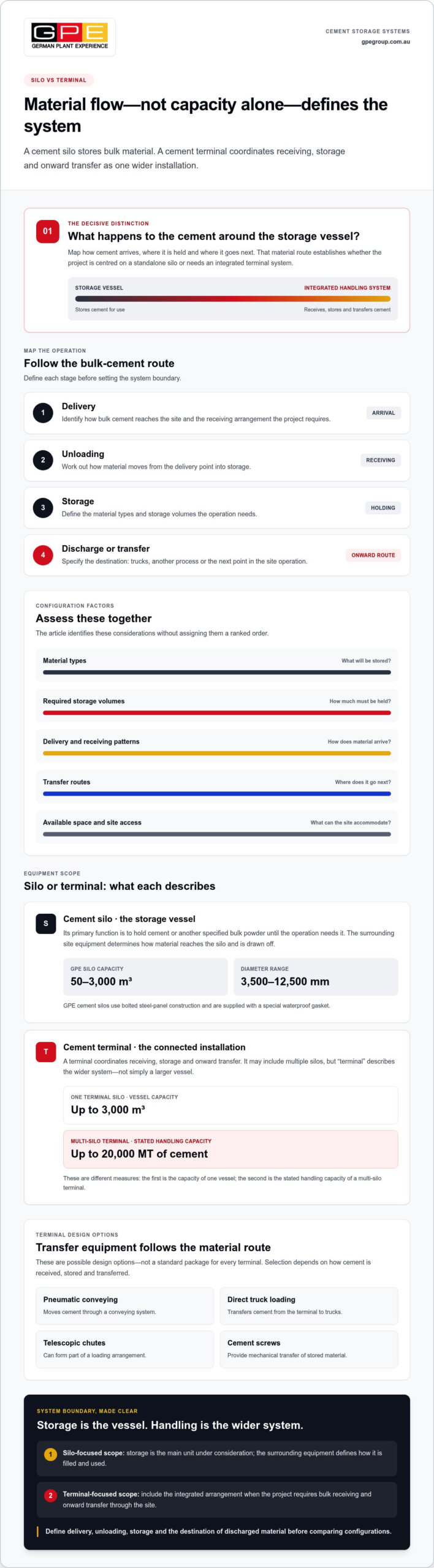
Bulk cement follows a sequence: delivery, unloading, storage, then discharge or transfer to its next destination. In a standalone arrangement, the silo provides the storage point, while the surrounding site equipment determines how material reaches the vessel and is drawn off for use. A terminal considers these movements as parts of one coordinated handling system.
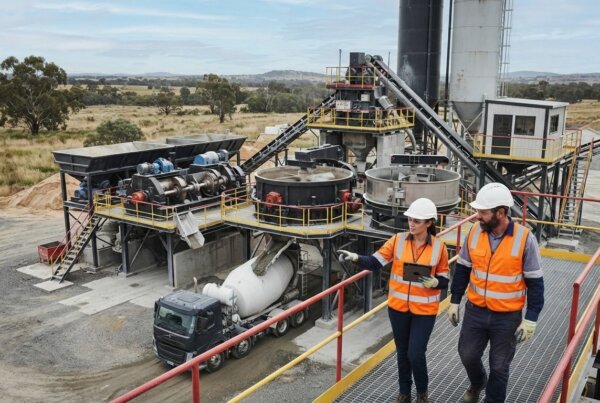
Start by defining the receiving method. A terminal designed for bulk deliveries must account for how material reaches the site and moves from the unloading point into storage. Then define the onward route. Cement may need to move to trucks or another process, so the design must connect storage to the intended dispatch or transfer point. The Portland Cement Association provides broader industry information on cement manufacturing and distribution, which offers context for this material flow.
Storage, Receiving and Discharge Functions
A silo provides storage whether it stands alone or forms part of a terminal. For a terminal, receiving and discharge requirements shape the connections and handling equipment arranged around that vessel. A project that transfers material from storage to trucks has different interface requirements from one that conveys cement to another process. The project design defines these duties; the presence of a silo alone does not describe the complete transfer process.
Depending on the required material route, terminal designs can include:
- Pneumatic conveying to move cement through a conveying system.
- Direct truck loading to transfer cement from the terminal to trucks.
- Telescopic chutes as part of a loading arrangement.
- Cement screws for mechanical transfer of stored material.
These are design options, not a standard package included in every terminal. Selection depends on how cement is received, stored and transferred. Define the delivery interface and the destination of discharged material to clarify which functions belong within the terminal scope.
How Multiple Silos Support Terminal Capacity
An individual cement terminal silo can hold up to 3,000 m³. A terminal assembled from multiple silos can handle up to 20,000 MT of cement. The first figure describes an individual vessel’s capacity; the second describes the stated handling capacity of a multi-silo terminal. They are distinct measures and should not be compared as equivalent units.
Storage capacity and transfer functions together define system scope. Silos determine how much cement can be held, while receiving and discharge arrangements determine how material moves through the facility. Consider a multi-silo installation as a connected operation, not simply a sum of storage vessels. For projects assessing GPE cement terminal systems, documenting the intended material route is a practical starting point for matching the arrangement to operational requirements.
Cement Silo vs Cement Terminal: Compare Scope, Capacity and Site Fit
Comparing a cement silo vs cement terminal means assessing the complete project requirement rather than choosing equipment by size alone. A single vessel may provide the required storage, while a terminal adds coordinated receiving and transfer functions. Even when storage volumes overlap, the system boundary and material route can differ.
A terminal is not simply a larger silo. It integrates storage with the arrangements that move cement into and out of the facility. This comparison separates the main functions so you can identify which scope fits your operation.
| Assessment area | Cement silo | Cement terminal |
|---|---|---|
| System scope | Individual bulk-storage vessel | Integrated receiving, storage and handling facility |
| Storage role | Holds cement for an operation’s use | Uses one or more silos within a broader arrangement |
| Transfer functions | Defined by the connected site process | Designed around the required receiving and onward transfer routes |
| Project context | Suitable where the principal requirement is storage | Relevant where storage and material movement need coordinated design |
Capacity alone does not determine whether a terminal is required. An individual cement terminal silo can hold up to 3,000 m³, while a terminal assembled from multiple silos can handle up to 20,000 MT of cement. One figure describes an individual silo’s volume; the other describes handling at terminal scale. Also consider how material arrives, where it must go next and which transfer functions the project requires.
When a Cement Silo May Match the Project Scope
A silo may suit a project whose central requirement is holding bulk cement for use at a plant or facility. Begin by defining the storage volume needed for operations, then consider how deliveries will replenish that stock. GPE provides custom-made silo configurations based on project specifications, so the storage arrangement can be considered alongside site and operating requirements rather than capacity in isolation.
When an Integrated Cement Terminal May Be Appropriate
A terminal may suit a project where receiving, storage and onward transfer need to be designed as connected functions. Multiple silos can support larger terminal requirements, while the selected transfer methods should reflect the actual material flow. Remote locations or restricted site space can also inform a flexible terminal design. The configuration is tailored to project requirements rather than assumed from a standard layout.
For an Australian project team, compare the storage duty with the full handling scope. Document delivery patterns, required stock and destination points before defining the system boundary. This gives the design process a clear basis for distinguishing a storage vessel from an integrated terminal, without relying on assumptions about throughput, footprint or cost.
How to Assess the Right Cement Storage Configuration
Start with the material and follow its route through the operation. Before comparing a silo with a terminal, define what must be stored, how deliveries arrive and what happens after cement leaves storage. These practical inputs help establish whether the project needs a storage vessel or a more integrated system.
- Identify the materials. List each bulk material the installation must store. Distinguish cement from other specified powders so the design discussion reflects the actual materials and their intended uses.
- Establish storage demand. Set out the required storage volume for each material and how it relates to use and replenishment. Keep the capacity of each silo separate from the total handling requirement for a terminal.
- Describe receiving and delivery frequency. Document how deliveries are expected to arrive, how often they are received and what unloading arrangement the project requires. This defines the connection between delivery and storage.
- Map discharge and onward transfer. Identify where cement must go after storage and which transfer method suits that route. Specify the required interfaces instead of assuming every terminal includes the same equipment.
- Review the site and erection approach. Record available space, site access and any constraints that may shape the configuration. Establish whether local crews can support erection and how engineering supervision will be incorporated.
Define Materials, Volumes and Delivery Requirements
For each material, document its intended use, required storage volume and delivery pattern. Then distinguish vessel capacity from terminal-level handling needs: the silo figure describes an individual storage unit, while the terminal requirement concerns the wider facility. Keeping those measures separate gives the design discussion a clear operating basis.
Record delivery, unloading and onward-transfer needs in the same process description. If cement moves from a receiving point through storage to a separate destination, capture each interface. A concise design brief should state what comes in, how it is unloaded, where it is stored and how it leaves the system.
Assess Site Constraints and Erection Approach
Site access and available space can influence a silo or terminal configuration, particularly at remote or constrained sites. GPE units are flat packed and transported in shipping containers, then bolted at site. Local crews can erect silos, and factory-trained engineers are always available for supervision. Include the assembly approach when planning the site work.
Design discussion checklist: specify materials, storage volumes, delivery frequency, unloading method, onward-transfer route, site access, space constraints and the proposed erection approach.
Bring these inputs together to develop a project-specific cement storage configuration aligned with the site and material flow.
GPE Cement Silos and Terminals: From Project Requirements to Design
GPE develops cement silo and terminal configurations around stated storage requirements, material flow and site conditions. Start by defining the duty of each part of the installation: which materials need storage, how they will be received and where they must be transferred. This gives the design process a project-specific basis rather than relying on a generic layout.
Custom-Made Storage and Bulk-Handling Systems
GPE cement silos are custom-made for specified bulk-material storage requirements. Applications include cement, fly ash, ground slag, quick lime, minerals and ores. Where operations require separate products, silo compartments can accommodate multiple materials. Identify each product and its storage role so the configuration reflects the facility’s actual needs.
Silos use bolted steel-panel construction and are supplied with a special waterproof gasket. For a terminal, the storage arrangement is coordinated with the required material-handling functions. Depending on the project’s transfer routes, designs can include pneumatic conveying, direct truck loading, telescopic chutes or cement screws. These are options selected to suit the project, not features that are necessarily included together in every configuration.
When storage supports a concrete production or infrastructure project, define how bulk material will connect to the wider operation. This keeps the silo or terminal brief focused on its role in the project and the material routes it must serve.
Project Discussion and Next Steps
A useful project brief brings the engineering inputs together before configuration begins. Set out the materials to be stored, required volume for each, expected delivery and unloading arrangements, onward-transfer needs, available site space and access constraints. For multi-product operations, include how compartments are intended to separate materials. These details give the design discussion a defined operational basis.
Site conditions also inform the erection approach. GPE units are flat packed and transported in shipping containers, then bolted at site. Local crews can erect silos, and factory-trained engineers are always available for supervision. Including access and assembly considerations in the initial brief connects the proposed configuration to site conditions.
With these parameters established, GPE can develop a silo or terminal arrangement around the project’s requirements, including the relevant storage and transfer functions. Prepare the material types, required volumes, site constraints and transfer needs, then discuss the project requirements with GPE.
Advance Your Cement Storage Project With a Defined Design Brief
Turn the project’s operating priorities into a clear engineering brief. Decide which material routes the system must accommodate, how storage will relate to the wider facility and which site conditions should shape the layout. These decisions give the design process a practical basis and help keep the configuration aligned with the operation.
With project parameters established, GPE can develop a tailored configuration for the required cement storage and terminal scope. Bolted steel-panel silos include a special waterproof gasket supplied with every unit, and factory-trained engineers are always available for supervision. Include site assembly in the planning from the outset.
Whether your assessment points to a silo or an integrated terminal, the right design begins with material flow and the intended use of the facility. To move from assessment to project planning, discuss your cement storage and terminal requirements with GPE. A well-defined brief gives the design conversation a clear starting point.
Frequently Asked Questions
What is the main difference between a cement silo and a cement terminal?
A cement silo is an individual storage vessel, while a cement terminal is a coordinated facility that manages bulk cement across connected operations. For the cement silo vs cement terminal decision, consider whether the project needs a place to hold material only or also requires a designed receiving and transfer system. Defining these responsibilities clarifies the equipment boundary and aligns the design discussion with the operation.
Can a cement terminal consist of multiple silos?
Yes. A cement terminal can be assembled from multiple silos. An individual cement terminal silo can hold up to 3,000 m³, while a terminal made up of multiple silos can handle up to 20,000 MT of cement. These figures refer to different measures, so specify whether you are defining an individual silo’s volume or the handling capacity required across the terminal.
What capacity is available for GPE cement silos?
GPE cement silos are available in capacities from 50 m³ to 3,000 m³, with diameters from 3,500 mm to 12,500 mm. The suitable configuration depends on the project’s storage requirements and site conditions. For a design discussion, identify the capacity required for each material and whether separate storage or compartments are needed.
How do I decide whether my project needs a silo or a terminal?
Map how material must enter, be stored and move onward. A silo may suit an operation focused on holding stock for its own use; a terminal is relevant when receiving, storage and transfer need coordinated design. If the project requires cement dispatch from storage, define the receiving and loading interfaces as well as the vessel capacity before settling the configuration.
Can cement silos be erected using local labour?
Yes. Local crews can erect GPE cement silos, and factory-trained engineers are always available for supervision. Consider the erection approach alongside transport, site access and project resources. Including the proposed crew and supervision arrangement in the project brief helps integrate assembly planning with the wider site programme.
Which transfer systems can be included in a cement terminal?
Depending on project requirements, terminal designs can include pneumatic conveying, direct truck loading, telescopic chutes or cement screws. The selection should follow the planned movement of cement rather than assume every system needs the same equipment. Describe the receiving point and destination for stored material in the design brief to help define the relevant transfer functions.
Are GPE cement silos suitable for materials other than cement?
Yes. GPE silo applications include fly ash, ground slag, quick lime, minerals and ores, as well as cement. Identify the specified materials at the outset because they inform the storage arrangement and intended use. Where multiple products need separation, silo compartments can accommodate more than one material. Include each product and its required storage volume in the project information used to develop the configuration.